
Science and Engineering
 Thawing Arctic soil awakens only half of soil microbes, new study reveals
 7 May 2026
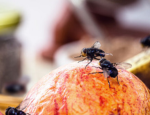 Tiny insect brain discovery offers a blueprint for faster and more efficient AI and robots
5 May 2026
The secret behind insects’ lightning fast reactions could offer a blueprint for more energy efficient robots and self-driving cars, according to a new study challenging our understanding of how brains process information.
 How touch and emotion combine to shape our memories and relationships
24 April 2026
New paper in Neuroscience & Biobehavioural Review proposes first neurobiological model for how emotionally meaningful touch stays in our memory and influences our connections with others.

 Feature: Championing Inclusion in STEM: Tyler’s Work on Equality, Diversity and Inclusion
 23 April 2026
From grassroots activism to national policy influence, Professor Tyler Kelly’s work on equality, diversity and inclusion (EDI) has been shaped by a long-standing commitment to making universities and research culture safer, fairer and more welcoming for LGBTQ+ people.
 ‘Chameleon’ bees change colour with the weather
22 April 2026
Study reveals some bees shift colour depending on humidity – and may explain why the same species can look different across climates.
 Queen Mary physicist showcases Higgs boson research in Parliament
 20 April 2026
Early Career Researcher Christos Vergis represents Queen Mary University of London at prestigious STEM for Britain event.
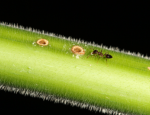 Wasps move in on ant–plant partnership, disrupting a 10‑million‑year mutualism
 15 April 2026
New research reveals unexpected intruders in a classic tropical tree–ant relationship, raising concerns for forest recovery in human‑altered landscapes.
 From Beijing to London: shaping the next generation of engineers
30 March 2026
What does it take to become a successful global engineer? For Professor Yue Chen, the answer lies in a journey shaped by curiosity, global experience, and a passion for innovation. As part of our celebration of Women’s History Month, we spotlight her journey from Beijing to a leading academic career in London.
 Queen Mary PhD Students Champion Neurodivergent Inclusion at Night of Science and Engineering
 19 March 2026
Three Queen Mary University of London PhD students took centre stage at this year’s Night of Science and Engineering, sharing research that pushes forward understanding, equity and inclusion for neurodivergent people.
 Queen Mary’s Night of Science and Engineering celebrates innovation, partnership, and impact
18 March 2026
Yesterday (Tuesday 17 March) Queen Mary University of London’s Faculty of Science and Engineering welcomed partners, collaborators, and invited guests to its annual Night of Science and Engineering.
.png) AI’s game-playing still has flaws, research shows
AI’s game-playing still has flaws, research shows13 March 2026
New research published in Machine Learning shows pattern learning is not enough to train AI to tackle games – and abstract representations or hybrid approaches may help.
 Why averages fail for bacteria in the open ocean
10 March 2026
How can bacteria that forage on organic particles survive in vast ocean regions where such particles are extremely sparse? A new study by researchers from Queen Mary University of London and ETH Zurich shows that variability at the level of individual bacteria plays a central role. Using a probabilistic population model linking mathematics and microbiology, the team demonstrates that rare, high-impact encounters sustain bacterial populations even when average conditions suggest decline.
10 March 2026
By working with industry partners, bio-based solvents could replace fossil derived materials by the 2030s.
 Queen Mary University of London spotlights UK–South Korea research links in ultrastrong & lightweight materials
9 March 2026
Researchers from Queen Mary University of London helped to strengthen international collaboration in Advanced Materials Science through a major UK–South Korea bilateral symposium at The Royal Society focused on Advanced Materials (4-5 March).
.png) Delocalised Electronic States: Powering Molecular Photovoltaics
Delocalised Electronic States: Powering Molecular Photovoltaics9 March 2026
Queen Mary Researchers Help Unlock the Secrets Behind 20% Efficient Organic Solar Cells.
-(150-x-115-px)-(1).png) Sea turtles are nesting earlier – but producing fewer eggs, less often: new research
Sea turtles are nesting earlier – but producing fewer eggs, less often: new research 12 February 2026
Climate change is reshaping life on Earth at an unprecedented pace. Across the globe, species are shifting their ranges, altering migration routes and breeding earlier in the year in response to rising temperatures. But while some of these changes appear adaptive, scientists are increasingly finding that hidden costs may undermine long-term survival.
 Sanity check warns EVs and heat pumps deliver “no proven carbon savings” ahead of 2030 clean power target
 11 February 2026
New analysis warns that UK electric vehicles and heat pumps are delivering no proven carbon savings — and urges urgent focus on grid capacity, renewables and carbon capture instead. The conclusion: the UK is prioritising the wrong things.
.png) “This engine is grinding to a halt” - Nature slowing down as climate change gains pace
“This engine is grinding to a halt” - Nature slowing down as climate change gains pace10 February 2026
New research from Queen Mary University of London shows nature’s renewal has “significantly” slowed down with rising temperatures, against expectation
-(150-x-115-px)-(1).jpg) Unsupervised strategies for naive animals: New model of adaptive decision making inspired by baby chicks, turtles and insects
Unsupervised strategies for naive animals: New model of adaptive decision making inspired by baby chicks, turtles and insects 4 February 2026
Precocial animals, the ones that move autonomously within hours after hatching or birth, have many biases they are born with that help them survive, finds a new Royal Society paper led by Queen Mary University of London.
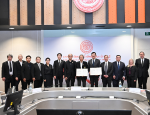 Queen Mary advances strategic partnership with Thailand
 3 February 2026
Queen Mary University of London has strengthened its international engagement further through a new partnership with King Mongkut's University of Technology Thonburi (KMUTT), following a delegation visit to Bangkok in January 2026.
 How people moved pigs across the Pacific
 5 January 2026
Genomic study reveals the routes taken by people as they island hopped across Indonesia