
Latest news
 Thawing Arctic soil awakens only half of soil microbes, new study reveals
 7 May 2026
 Largest study on genetics of blood proteins uncovers new disease mechanisms and drug repurposing opportunities
 7 May 2026
Involving a collaboration with 118 investigators contributing from 89 institutions, scientists from Queen Mary University of London’s Precision Healthcare University Research Institute and Berlin Institute of Health (BIH) at Charité have led the world’s largest study on the genetic regulation of blood proteins.
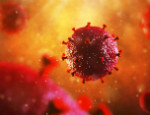 Scientists discover how HIV hijacks a cellular 'gateway' to infect resting immune cells
6 May 2026
The findings, produced by researchers from Queen Mary University of London and published in Nature, overturn long-held assumptions about HIV infection and could reshape understanding of how the virus establishes hidden reservoirs in the body.
 Professor Claudia Langenberg elected as member of Germany’s Leopoldina
6 May 2026
Professor Claudia Langenberg, Director of Queen Mary’s Precision Healthcare Research University Research Institute (PHURI) has been elected to the prestigious German National Academy of Medical Sciences, the Leopoldina.
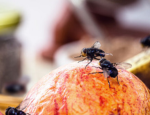 Tiny insect brain discovery offers a blueprint for faster and more efficient AI and robots
5 May 2026
The secret behind insects’ lightning fast reactions could offer a blueprint for more energy efficient robots and self-driving cars, according to a new study challenging our understanding of how brains process information.
.png) Queen Mary academics ranked among UK’s top 100 researchers in 2026
Queen Mary academics ranked among UK’s top 100 researchers in 20261 May 2026
Academics from across Queen Mary University of London have been ranked among the top 100 researchers in their fields in the UK, according to Research.com’s 2026 global rankings.
 New tool helps to identify people at highest risk of obesity-related diseases
30 April 2026
A simple tool, developed by researchers at Queen Mary University of London and the Berlin Institute of Health at Charité, could help identify which people living with obesity or overweight are most likely to develop serious obesity-related conditions such as type 2 diabetes and heart disease.
 Industry leaders set out plan to strengthen creative workforce across the Thames Estuary
28 April 2026
A major skills summit has set out a clear agenda to overcome unequal access to opportunity and improve how people enter, train and build careers in the creative industries across the Thames Estuary.
 How touch and emotion combine to shape our memories and relationships
24 April 2026
New paper in Neuroscience & Biobehavioural Review proposes first neurobiological model for how emotionally meaningful touch stays in our memory and influences our connections with others.
 Queen Mary academic Professor Peter Hennessy appointed to Order of the Garter by King Charles
23 April 2026
Historian and Attlee Professor of Contemporary British History recognised with one of the UK’s oldest and most prestigious honours on St George’s Day.

 Feature: Championing Inclusion in STEM: Tyler’s Work on Equality, Diversity and Inclusion
 23 April 2026
From grassroots activism to national policy influence, Professor Tyler Kelly’s work on equality, diversity and inclusion (EDI) has been shaped by a long-standing commitment to making universities and research culture safer, fairer and more welcoming for LGBTQ+ people.
 Prostate cancer overdiagnosis rises sharply with age
22 April 2026
Researchers at Queen Mary University of London have found that the likelihood of prostate cancer overdiagnosis – the detection of a cancer that would never have been diagnosed during a patient’s lifetime but for PSA screening – is low in younger men but rises substantially with old age.
 ‘Chameleon’ bees change colour with the weather
22 April 2026
Study reveals some bees shift colour depending on humidity – and may explain why the same species can look different across climates.
 New podcast explores why climate law isn’t delivering on climate ambition
21 April 2026
Making Climate Law Work, launched today by Queen Mary University of London, examines the gap between climate ambition and enforceable legal action.
 First UK study into the prevalence of poison in deaths by suicide
21 April 2026
A new study, led by Professor Amrita Ahluwalia of Queen Mary University of London, shows that a high dosage of a substance was responsible for 164 deaths by suicide in the UK from March 2019 to August 2024, with young people disproportionately impacted.
 Queen Mary physicist showcases Higgs boson research in Parliament
 20 April 2026
Early Career Researcher Christos Vergis represents Queen Mary University of London at prestigious STEM for Britain event.
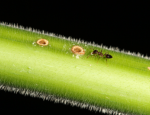 Wasps move in on ant–plant partnership, disrupting a 10‑million‑year mutualism
 15 April 2026
New research reveals unexpected intruders in a classic tropical tree–ant relationship, raising concerns for forest recovery in human‑altered landscapes.

 Blog: Kidney disease is growing in Africa: big new study casts light on genetic risk factors
10 April 2026
Segun Fatumo, Professor and Chair of Genomic Diversity at Queen Mary University of London, has written for The Conversation on ‘Kidney disease is growing in Africa: big new study casts light on genetic risk factors.’
 Animals are powerful landscape engineers shaping the Earth’s surface
 8 April 2026
Animals are constantly reshaping the landscapes around them, often in ways that go unnoticed
 From Beijing to London: shaping the next generation of engineers
30 March 2026
What does it take to become a successful global engineer? For Professor Yue Chen, the answer lies in a journey shaped by curiosity, global experience, and a passion for innovation. As part of our celebration of Women’s History Month, we spotlight her journey from Beijing to a leading academic career in London.
Largest genomic study of kidney function in Africa reveals new genetic risk factors25 March 2026
An international research collaboration led by Queen Mary University of London and University of the Witwatersrand (Wits) in South Africa has published the most comprehensive genomic investigation of kidney function ever conducted in African populations.
 War in Iran has already produced emissions equivalent to a year of Iceland’s carbon output
25 March 2026
New analysis involving Queen Mary researchers estimates more than 5 million tonnes of CO₂e generated in just two weeks of conflict
 Queen Mary convenes partners to improve growth, skills and innovation across East London
 19 March 2026
Yesterday, 18 March, Queen Mary University of London’s East London Civic Action Network (ELCAN) brought leaders from higher education, industry, non-profits, local authority and the City together to define an ambitious, collaborative, and deliverable shared vision for growth, skills and innovation in East London.
 Queen Mary PhD Students Champion Neurodivergent Inclusion at Night of Science and Engineering
 19 March 2026
Three Queen Mary University of London PhD students took centre stage at this year’s Night of Science and Engineering, sharing research that pushes forward understanding, equity and inclusion for neurodivergent people.
 Queen Mary’s Night of Science and Engineering celebrates innovation, partnership, and impact
18 March 2026
Yesterday (Tuesday 17 March) Queen Mary University of London’s Faculty of Science and Engineering welcomed partners, collaborators, and invited guests to its annual Night of Science and Engineering.
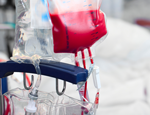 Landmark trial on whole blood transfusion published in NEJM
17 March 2026
The results of a landmark clinical trial on the use of whole blood transfusions in pre-hospital trauma care have been published in the New England Journal of Medicine.
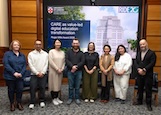 Queen Mary's Digital Education Studio wins prestigious prize
16 March 2026
Queen Mary University of London's Digital Education Studio has been awarded the 2026 Roger Mills Prize – one of the most prestigious honours in digital higher education – for its transformative approach to online learning through the CARE as Value-Led Digital Education Transformation initiative.
.png) AI’s game-playing still has flaws, research shows
AI’s game-playing still has flaws, research shows13 March 2026
New research published in Machine Learning shows pattern learning is not enough to train AI to tackle games – and abstract representations or hybrid approaches may help.
 Queen Mary researchers featured in international exhibition exploring AI and the paradox of agency
13 March 2026
Work by the Planetary Portals collective, co-founded by two Queen Mary University of London academics, will feature in a major international exhibition examining the relationship between artificial intelligence, technology and human agency.
 Blog: Queen Mary: improving the drug development pipeline
12 March 2026
Professor Amrita Ahluwalia is the Dean for Research in Queen Mary University of London’s Faculty of Medicine and Dentistry, a pharmacologist and Professor of Vascular Pharmacology. She is also the former editor-in-chief of the British Journal of Pharmacology and inaugural Chair of the Basic and Translational Committee for the International Union of Basic and Clinical Pharmacology.