
Red Flags - The Toxic Truth Behind your Tampon
What if the products we trust most every month carried hidden chemicals - and the law didn’t care? Reports of testing of UK tampons include findings of traces of pesticides and toxic substances like PFAS, yet no law demands they be tested for safety. From outdated consumer laws that only act after harm, to chemical rules that overlook the body, and medical regulations that don’t apply at all, menstrual products sit in a legal blind spot that urgently needs closing.
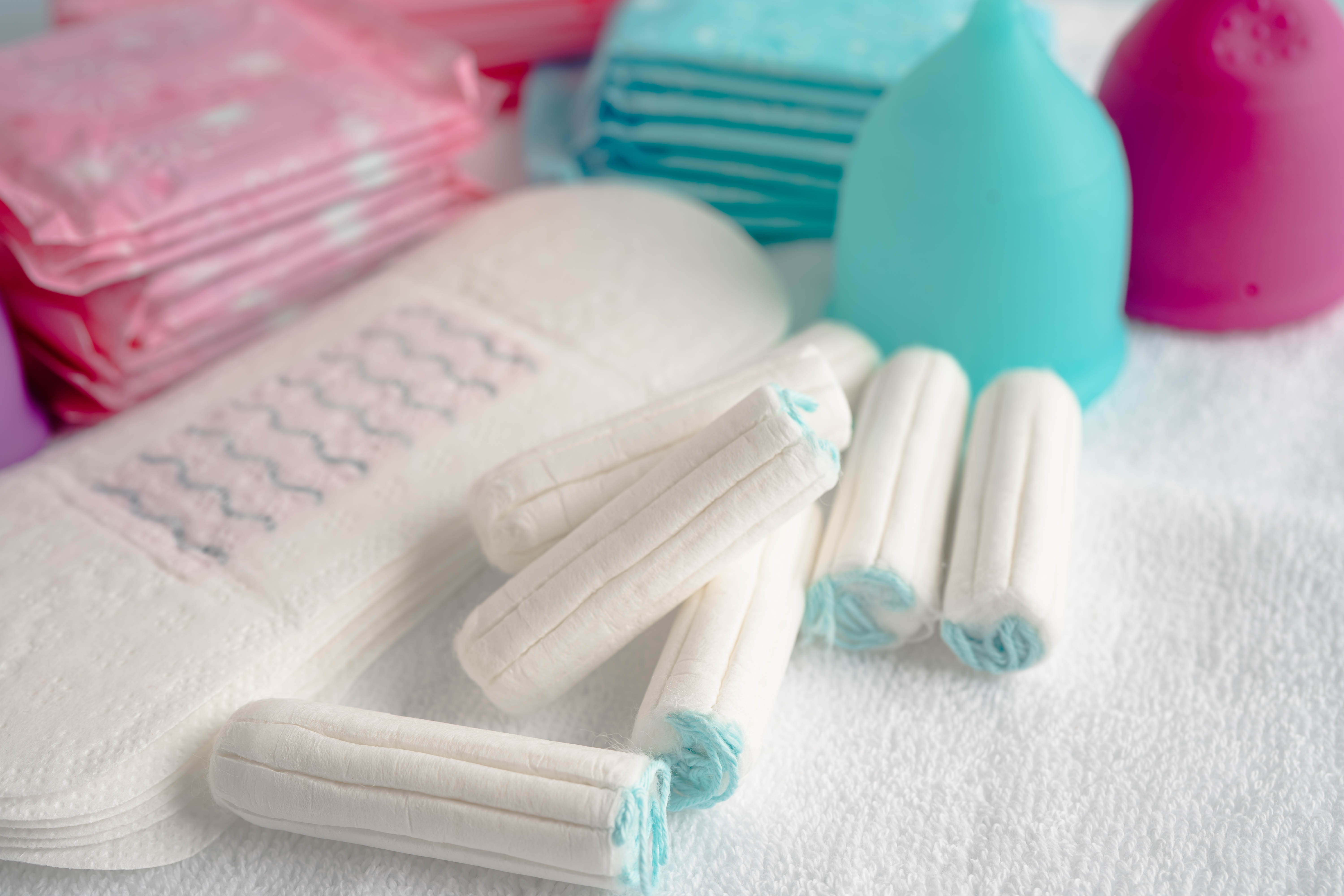
What’s Really in Our Period Products
What’s actually in a tampon and why it should worry you may not be a hypothetical question anymore. UK civil-society groups state that independent testing commissioned by them has detected pesticide residues and other contaminants in some menstrual products sold here. One UK charity report flagged detectable glyphosate in samples while many peer-reviewed studies have found a range of chemicals, including traces of heavy metals, phthalates and per-/poly- fluoroalkyl substances (PFAS), in various period products and their materials. These findings are particularly consequential because the vaginal and vulvar tissues where these products are used are highly permeable and have been shown to absorb small chemical molecules more quickly and widely as compared to ordinary skin exposure. Studies show that when chemicals enter the body through the vaginal tissue, they may cause irritation or damage to the vaginal lining and interfere with the natural microbial environment. This increases vulnerability to STIs like herpes and HIV. Despite the presence and high potentiality of such bodily harm, tampons are still considered a consumer product not a medical device, which would have made it obligatory for them to go through testing for chemical safety and provide a full list of contents.
Legally speaking, sections 5, 7, and 9, of the General Products Safety Regulations 2005 outline certain provisions for consumer goods placed on the UK market such as: only “safe products” can be put on the market, manufacturers should give consumers enough information to “assess the risks”, and “trading standards” can be used after a problem is reported. The inherent problem lies in the nature of these regulations - they are reactive and don’t prevent exposure in the first place. In practice, that means manufacturers can sell products without routine chemical screening and that regulatory bodies have limited automatic powers to demand pre-market testing for contaminants in this product category. Currently, the only safeguard against this blind spot is supposed to be the Consumer Protection Act 1987. Section 2(1) of this act makes producers liable for damage caused by a defective product and the expectation that producers would adhere to section 3(1), which outlines the conditions that when a product is less safe than consumers are “entitled to expect”, it is defective.
However, there are practical reasons for this blind spot as well. Cotton - the raw material in many single-use products - is often treated in the supply chain with many agricultural chemicals and is one of the world’s most pesticide-intensive crops. Furthermore, manufacturing and supply chain contamination can be very hard to trace, and industry standards are not always statutory. But these practicalities don’t resolve the public health problem millions of people face when using these products regularly, often from their teenage years. Put simply: current UK consumer laws assume safety until injury occurs whereas scientific observations suggest that statutes should be demanding proof of safety before these products are available for sale.
The Law on Chemicals: Strong on Paper, Weak in Practice
If you think the law already filters dangerous chemicals out of your products, think again. The UK’s flagship chemical regulation - UK Registration, Evaluation, Authorisation, and Restriction of Chemicals (i.e. UK REACH), in force since 1 January 2021 - reads like a safety net but works more like a sieve. The UK’s REACH framework is derived from the EU’s REACH Regulation (EC) No 1907/2006, which established the core system for regulating chemicals across Europe. After Brexit, this system was retained and adapted into domestic law through the REACH etc. (Amendment etc.) (EU Exit) Regulations 2019, creating “UK REACH” with the same structure but overseen by UK regulators such as the Health and Safety Executive. On paper, it covers everything from industrial solvents to the dyes in your sofa cushions. In practice, it often stops short of protecting you from the chemicals hidden in your menstrual products.
Under Article 3(3), REACH extends beyond pure substances to “articles”, meaning finished goods like clothes, electronics, or even tampons. That sounds reassuring, until you reach Article 7(1), which limits that protection to cases where a substance is intentionally released during normal use, or where a “substance of very high concern” (SVHC) exceeds 0.1% of the product’s weight.
Here’s the problem: pesticides or PFAS in tampons aren’t meant to be released - they are contaminants, not ingredients. And most of them haven’t yet been formally listed as SVHCs in the UK. That means manufacturers have no duty to register, declare, or restrict them, as long as the levels remain below the narrow threshold.
So while REACH is busy regulating chemicals in car parts and plastic toys, it is not really checking the materials that come into the closest contact with the human body. The law’s logic in this situation is industrial and not intimate, which very closely corresponds to Article 14 of REACH. Its key safety mechanism, the Chemical Safety Assessment under Article 14, focuses on environmental discharge and worker exposure of products, not the biology of the product itself and its consequences after intimate use. The result is a legislative architecture that protects only supply chains but can leave the person at the end of the chain - the user - with little to no direct legal protection from low-level contaminants in their intimate products.
When Menstrual Products Fall Through the Legal Cracks
Here’s the biggest irony: tampons are used in the most intimate parts of the body, but legally, they are not treated as medical products at all. Under UK law, the Medicines and Healthcare Products Regulatory Agency (MHRA) only classifies something as a medical device if it is intended for the treatment or diagnosis of a disease or the alteration of a physiological function through a “pharmacological, metabolic, or immunological means”. Menstrual products don’t make the cut. They’re classed as consumer goods under the General Product Safety Regulations, the same framework that governs shampoo or kitchen foil. That means there is no legal requirement for manufacturers to disclose ingredients, prove chemical safety through testing, or even report the long-term effects of use.
This legal grey area has paramount consequences. If a tampon causes an allergic reaction or irritation, there is no direct route for investigation through medical device safety systems. Instead complaints fall through the cracks - handled by Trading Standards rather than the MHRA. The oversight also carries an equality dimension. The Equality Act 2010 places a Public Sector Equality Duty on authorities to consider how policies affect people based on protected characteristics. Yet, despite menstrual products being essential for those who menstruate, there’s been no proactive review of whether this classification disadvantages them. As a result, products that are designed for a biological function unique to menstruation are regulated more loosely than products for dental care or shaving.
Many advocacy groups like WEN UK have called for menstrual products to be treated as intimate health items and them requiring the same safety standards as any other medical device. But, until that happens, consumers are left relying on voluntary industry safety and screening standards and brand trust, which are not subject to legal accountability.
Other countries have already begun to respond more directly to concerns about chemicals in menstrual products. India regulates sanitary napkins through mandatory BIS (Bureau of Indian Standards) certification, with the ISI (Indian Standards Institute) mark indicating that products satisfy prescribed benchmarks for safety, hygiene, and functional performance. Although, challenges pertaining to basic menstrual rights persist in countries like the United States. While tampons are legally classified as medical devices, giving regulators clearer authority to require safety data and labelling, congress still did not pass legislation to improve transparency for menstrual products such as the Menstrual Products Right to Know Act of 2022.
Hope isn’t Lost: Building a Safer Future for Menstrual Health
While regulation lags behind, people aren’t powerless. Across the UK, schools, universities, and community groups are already building a fairer, safer culture around menstruation through initiatives like the following:
1. phs Group - Free Period Products in Schools
https://www.phs.co.uk/resources/free-period-products-and-schools-everything-you-need-to-know/
A UK-wide initiative supplying free menstrual products to schools and colleges so that no student misses education due to lack of access.
2. Department for Education’s Period Products Scheme
https://civilservice.blog.gov.uk/2021/12/08/how-dfe-helped-learners-access-education-period/
While many government schemes help with basic access, many eco-friendly and low-chemical menstrual products can cost more upfront that standard disposables, creating a financial barrier for those tight on budgets and contributing to unequal access to safer, less processed options. But this period products scheme is a government-backed programme ensuring learners across England can access free, environmentally conscious period products through their schools and colleges.
3. Plan International UK - Period Proud Peer Programme
https://plan-uk.org/become-period-proud-peer
A youth-led network empowering students to normalise period conversations, challenge stigma, and promote menstrual health education in schools and communities.
4. CCEA - Period Dignity Films
https://ccea.org.uk/learning-resources/period-dignity/period-dignity-films#section-29109
A set of educational short films created for students, teachers, parents to open up discussions about menstruation and promote empathy, dignity, and understanding.
5. University of Edinburgh - Menstrual Health Education Resources
https://reproductive-health.ed.ac.uk/hope/hope-in-education/other-teaching-resources
An academic collection of teaching materials, research, and community resources designed to inform young people about reproductive health and menstrual well-being.
Periods are natural. Hidden chemicals shouldn’t be.
By Pranjal Sharma, Student Blog Writer at the QMLAC.
This blog is for information only and does not constitute legal advice on any matter. While we always aim to ensure that information is correct at the date of posting, the legal position can change, and the blogs will not ordinarily be updated to reflect any subsequent relevant changes. Anyone seeking legal advice on the subject matter should contact a specialist legal representative
Works Cited:
- https://www.theguardian.com/environment/2025/may/28/toxic-pesticide-levels-found-in-tampons-40-times-higher-than-legal-limit-for-water?utm_source=chatgpt.com
- https://www.pan-uk.org/period-products/
- https://pubmed.ncbi.nlm.nih.gov/37743685/
- https://openi.nlm.nih.gov/detailedresult?img=PMC3948026_ehp.122-A70.g001&req=4
- https://www.gov.uk/guidance/borderline-products-how-to-tell-if-your-product-is-a-medical-device#:~:text=The%20MHRA%20can%20give%20advice,approaches%20the%20MHRA%20for%20advice.
- https://www.gov.uk/government/publications/public-sector-equality-duty-guidance-for-public-authorities/public-sector-equality-duty-guidance-for-public-authorities
- https://theconversation.com/how-a-lack-of-period-product-regulation-harms-our-health-and-the-planet-248941
- https://www.wen.org.uk/wp-content/uploads/Blood-Sweat-and-Pesticides-1-May-2025.pdf
- https://www.fda.gov/consumers/consumer-updates/facts-tampons-and-how-use-them-safely
- https://www.govtrack.us/congress/bills/117/hr8829#:~:text=Died%20in%20a%20previous%20Congress,(sometimes%20called%20omnibus%20bills).
- https://www.congress.gov/bill/117th-congress/house-bill/8829
- https://www.theperiodlady.co.uk/blog/cost-comparison-reusable-v-disposable-menstrual-products.html#:~:text=Your%2520cloth%2520pads%2520will%2520last,12months%2520x5%2520years%2520=%2520%C2%A3600