Thank you for considering an application
To apply you’ll need to:
- Make note of the Queen Mary institution code: Q50
- Make note of your chosen course UCAS code:
Politics
- L202 — BA (Hons)
- L20Y — BA (Hons) with Year Abroad
- Click on the link below:
Have further questions? How to apply | Entry requirements
Politics
2 study options
Politics BA (Hons)
Key information
- Degree
- BA (Hons)
- Duration
- 3 years
- Start
- September 2027
- UCAS code
- L202
- Institution code
- Q50
- Typical A-Level offer
- Grades ABB at A-Level.
Full entry requirements (including contextual admissions) - Home fees
- £9,790
- Overseas fees
- Fees for 2027 entry will appear here shortly
*These fees are for the 2026-27 academic year and are provided as a guideline. Fees for 2027-28 have not yet been set.
Politics with Year Abroad BA (Hons)
Key information
- Degree
- BA (Hons)
- Duration
- 4 years
- Start
- September 2027
- UCAS code
- L20Y
- Institution code
- Q50
- Typical A-Level offer
- Grades ABB at A-Level.
Full entry requirements (including contextual admissions) - Home fees
- £9,790
- Overseas fees
- Fees for 2027 entry will appear here shortly
*These fees are for the 2026-27 academic year and are provided as a guideline. Fees for 2027-28 have not yet been set.
Overview
Explore theory and modern political thought to analyse the issues that dominate the news and your social media feeds.
There's never been a more important time to study politics. We're at a crucial point, facing big issues like war, climate, immigration, and economic inequality. And rising discontent with democracy is challenging the foundations of politics globally.
Explore political thought and empirical and theoretical approaches to international relations and politics. You'll graduate with invaluable political knowledge and analytical and communication skills that open doors to a huge variety of careers.
Immerse yourself in the world of politics by studying abroad, completing work placements and taking part in simulation activities. Learn from our regional expertise encompassing North and South America, Europe, Africa, Russia, South Asia and Southeast Asia.
Enjoy the freedom to shape your study
Perhaps you want to take a closer look at race and racism in world politics. Or maybe you want to examine the intricacies of the European Union. Shape your study with our range of modules, taught by expert academics in their respective fields.
Structure
You can complete your Politics degree in three or four years. If you choose to do a year abroad this will take place in Year 3 and Year 3 modules will instead be studied in Year 4.
Year 1
Compulsory:
- Thinking Politically: Introduction to concepts, theories and ideologies
- Introduction to International Relations
- Political Analysis
- Politics in Action
Choose from:
- Background to British Politics
- Global Histories
- 15 credits from another Department
Please note that all modules are subject to change.
Year 2
Compulsory (45 credits):
• Modern Political Thought I (15)
• Modern Political Thought II (15)
• Introduction to Social Science Methodologies (15)
Choose one from:
• Qualitative Methods for Social Science Research (15)
• Quantitative Methods for Social Science Research (15)
• Unsettling Methods: Creativity in/for Social Science Research (15)
Choose at least 30 credits from:
• British Politics (30)
• Comparative Politics (30)
• Modernity: Theories of the State, Economy and Society (30)
• The UK and the EU (15)
• US Politics (15)
Choose up to 30 credits from department modules like:
• Colonialism, Capitalism and Development (15)
• Foreign Policy Analysis (15)
• Gender and Feminisms in World Politics (30)
• Global Theory (30)
• International Relations Theory (30)
• Politics of International Law (15)
• Power in Global Governance (15)
• Social Theory (30)
• The International Politics of Security (15)
• The International Politics of the Developing World (15)
• War in World Politics (15)
Please note that all modules are subject to change.
Year 3
Compulsory:
- Dissertation in Politics/International Relations
Choose additional 75 credits from department modules like:
- Africa and International Politics
- American Politics, Carceral State and Social Movements
- Analysing Public Policy
- Analysing Public Policy: Independent Study
- Civil Society - Internship
- Civil Society: Democracy, Activism and Social Change
- Contemporary Russian Politics
- Critical Currents in North American Political Thought
- Environmental Politics
- Gender and Politics
- Global Ethics
- Global Politics of Health and Disease
- Globalisation: Issues and Debates
- Latin American Politics
- Making Democracy Work: Public Opinion, Representation and Information
- Migration and the Politics of Belonging
- Nationalism & Ethnicity in International Relations
- Parliamentary Studies
- Parliamentary Studies (Internship)
- Political Violence and Liberal Modernity
- Politics of South Asia
- Politics of South Asia – Independent Research
- Populism in 21st Century Europe
- Populism: A Global Perspective
- Race and Anti-Racism in World Politics
- Radical Politics Today
- Socialist Political Thought
- Technology, Politics, War
- The Political Economy of Southeast Asia
- The Politics of the Anti-Colonial
- The Politics of the Post-Colonial Middle East
- US Foreign Policy
Please note that all modules are subject to change.
Each year, you may also choose some modules from outside the Department of Sociology, Politics and International Relations.
Study options
Apply for this degree with any of the following options. Take care to use the correct UCAS code - it may not be possible to change your selection later.
Year abroad
Go global and study abroad as part of your degree – apply for our Politics BA with a Year Abroad. Queen Mary has links with universities in Europe, North America, Asia and Australia (partnerships vary for each degree programme).
Find out more about study abroad opportunities at Queen Mary

Coming to London from a rural area, I was excited by the opportunities on offer. There’s no better city to study in, and at Queen Mary, there's a fantastic sense of community you don't get in other places. The choice of modules is so unique to Queen Mary, so I can study what I'm passionate about, and my grades reflect that passion. As for future employability, Queen Mary has a fantastic Careers team. I've taken part in a consultancy project, launched my own business, and experienced leadership roles through my involvement in societies.
Teaching
Teaching and learning
You’ll receive approximately 8 to 12 hours of weekly contact time, in the form of formal lectures and small group seminars. The seminars are designed to generate informed discussion around set topics and may involve student presentations, group exercises, and role-play, as well as open discussion.
You’ll complete a further 20 hours of independent study per week.
Assessment
You'll be assessed by coursework and exams. A few modules are assessed by coursework only.
Resources and facilities
We offer excellent on-campus resources to aid your studies, including:
- Events throughout the year, such as public debates, film nights, and book launches, which attract diverse audiences and offer networking opportunities
- The Centre for the Study of Race, Class and Empire, welcomes students and academics interested in learning and researching all matters relating to Europe
- The Mile End Institute, a major discussion forum that specialises in contemporary British politics, featuring regular high-profile speakers.
Entry requirements
| A-Level | Grades ABB at A-Level. |
| IB | International Baccalaureate Diploma with a minimum of 32 points overall, including 6,5,5 from three Higher Level subjects. |
| BTEC | See our detailed subject and grade requirements |
| Access HE | We consider applications from students with the Access to Higher Education Diploma. The minimum academic requirement is to achieve 60 credits overall, with 45 credits at Level 3, of which 15 credits must be at Distinction and 15 credits at Merit or higher. Applications are considered on a case by case basis. Due to the high volume of applications, we do not make offers of study purely on the basis of meeting grade requirements. |
| GCSE | Both GCSE English and Maths at grade C or 4 or an acceptable equivalent will be required. |
| EPQ | Alternative offers may be made to applicants taking the Extended Project Qualification. For further information please visit: qmul.ac.uk/undergraduate/entry/epq |
| Contextualised admissions | Our standard contextual offer: BBC at A-Level. Our enhanced contextual offer: BCC at A-Level. More information on our contextual offer criteria can be found on our contextualised admissions page. Please note that General Studies and Critical Thinking are excluded from any A-Level offer and cannot be considered. |
| A-Level | Grades ABB at A-Level. |
| IB | International Baccalaureate Diploma with a minimum of 32 points overall, including 6,5,5 from three Higher Level subjects. |
| BTEC | See our detailed subject and grade requirements |
| Access HE | We consider applications from students with the Access to Higher Education Diploma. The minimum academic requirement is to achieve 60 credits overall, with 45 credits at Level 3, of which 15 credits must be at Distinction and 15 credits at Merit or higher. Applications are considered on a case by case basis. Due to the high volume of applications, we do not make offers of study purely on the basis of meeting grade requirements. |
| GCSE | Both GCSE English and Maths at grade C or 4 or an acceptable equivalent will be required. |
| EPQ | Alternative offers may be made to applicants taking the Extended Project Qualification. For further information please visit: qmul.ac.uk/undergraduate/entry/epq |
| Contextualised admissions | Our standard contextual offer: BBC at A-Level. Our enhanced contextual offer: BCC at A-Level. More information on our contextual offer criteria can be found on our contextualised admissions page. Please note that General Studies and Critical Thinking are excluded from any A-Level offer and cannot be considered. |
Non-UK students
We accept a wide range of European and international qualifications in addition to A-levels, the International Baccalaureate and BTEC qualifications. Please visit International Admissions for full details.
If your qualifications are not accepted for direct entry onto this degree, consider applying for a foundation programme.
English language
Find out more about our English language entry requirements, including the types of test we accept and the scores needed for entry to the programme.
You may also be able to meet the English language requirement for your programme by joining a summer pre-sessional programme before starting your degree.
Further information
Funding
Loans and grants
UK students accepted onto this course are eligible to apply for tuition fee and maintenance loans from Student Finance England or other government bodies.
Scholarships and bursaries
Queen Mary offers a generous package of scholarships and bursaries, which currently benefits around 50 per cent of our undergraduates.
Scholarships are available for home, EU and international students. Specific funding is also available for students from the local area. International students may be eligible for a fee reduction. We offer means-tested funding, as well as subject-specific funding for many degrees.
Find out what scholarships and bursaries are available to you.
Support from Queen Mary
We offer specialist support on all financial and welfare issues through our Advice and Counselling Service, which you can access as soon as you have applied for a place at Queen Mary.
Take a look at our Student Advice Guides which cover ways to finance your degree, including:
- additional sources of funding
- planning your budget and cutting costs
- part-time and vacation work
- money for lone parents.
Careers
Preparing you for your future
We’ll help you understand and analyse evidence, communicate confidently, and improve your critical thinking. With AI and technology reshaping our world, mastering these skills is essential for employers.
Once you’ve developed these skills, you’ll be ready for careers in government, policy research, education, business, and many other fields.
At Queen Mary, we empower our students with invaluable political knowledge and research that open doors to a global future.
Opportunities to apply theory in practice
Apply your skills with our unique Parliamentary internship module. Work closely with practitioners in politics and international relations.
Or get involved with qHeritage, our award-winning, student knowledge exchange programme. Work in teams on projects that help solve problems and deliver benefits to heritage organisations.
Where our graduates are now
- MP, Labour Party
- Policy and Strategy Advisor, UK Home Office
- Conference Producer - International Programmes, Informa Connect.
Career support
Access a dedicated Careers Consultant who can help you navigate your own career path. The Queen Mary careers team also offer:
- Help with finding work experience, internships and graduate jobs
- Feedback on CVs, cover letters and application forms
- Interview coaching.
Learn more about career support and development at Queen Mary.
Data for these courses
Politics - BA (Hons)
Politics with Year Abroad - BA (Hons)
The Discover Uni dataset (formerly Unistats)
About the School
School of Society and Environment
At Queen Mary’s School of Society and Environment, we explore the big questions shaping our world - past, present, and future. From medieval Europe to modern America, from global environmental change to the politics of the Middle East, our programmes blend rigorous scholarship with real-world impact.
Our academics are among the world’s leading researchers, and our departments consistently rank among the best in their fields (QS World University Rankings; Research Excellence Framework). Students also rate our teaching highly (National Student Survey), recognising our commitment to an engaging, high-quality learning experience.
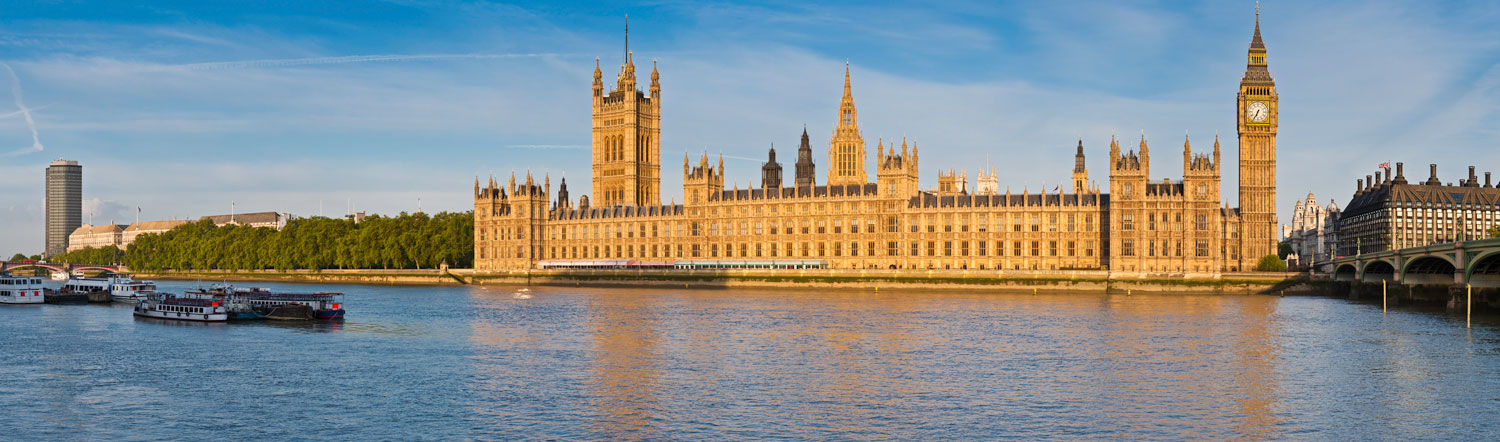
Located in London, home to Parliament, political think tanks, cultural institutions and global businesses, we offer excellent opportunities to collaborate with local, national, and international partners. Here, you’ll apply your learning beyond the classroom, gain hands-on experience, and join a diverse, inclusive community that will challenge your perspective and equip you with the skills to make a difference.
You’ll also have access to the Mile End Institute, a major policy hub at Queen Mary that connects policymakers, academics, and local communities to address pressing national issues.