Biology Society trip to Royal Botanic Gardens, Kew
In early April, members of the Biology Society visited the Royal Botanic Gardens, Kew, alongside academic staff, for a day of discovery across glasshouses, gardens, and ecosystems. From tropical crops and carnivorous plants to birdwatching and discussions on conservation, the trip offered a hands-on opportunity to connect classroom learning with the natural world.

In early April, Professor Andrew Leitch and Dr David Hone accompanied the Biology Society on a visit to the Royal Botanic Gardens, Kew, holding around 10% of the world’s plant biodiversity!
Our day began at the Palm House containing tropical and subtropical plants. Professor Leitch highlighted many of the commercial and agriculturally beneficial plants like rubber trees (Hevea brasiliensis) and triploid bananas that create clones through asexual reproduction. This was followed by a discussion on the challenges that arise when balancing mass-agricultural production against conservation of native species, particularly in palm oil production.
Along the Holly Walk we admired the cherry blossoms, hunted for leaf miners (a revisit to First Year Ecology fieldtrips) and encountered an abundance of wildlife, including a fox! We spent a lot of time birdwatching and identifying ducks, geese (including adorable baby Egyptian geese) and parakeets nesting within tree trunks. Dr Hone answered all our questions and particularly helped us distinguish the subtle differences between crows (completely black) and jackdaws (grey heads with blue eyes).

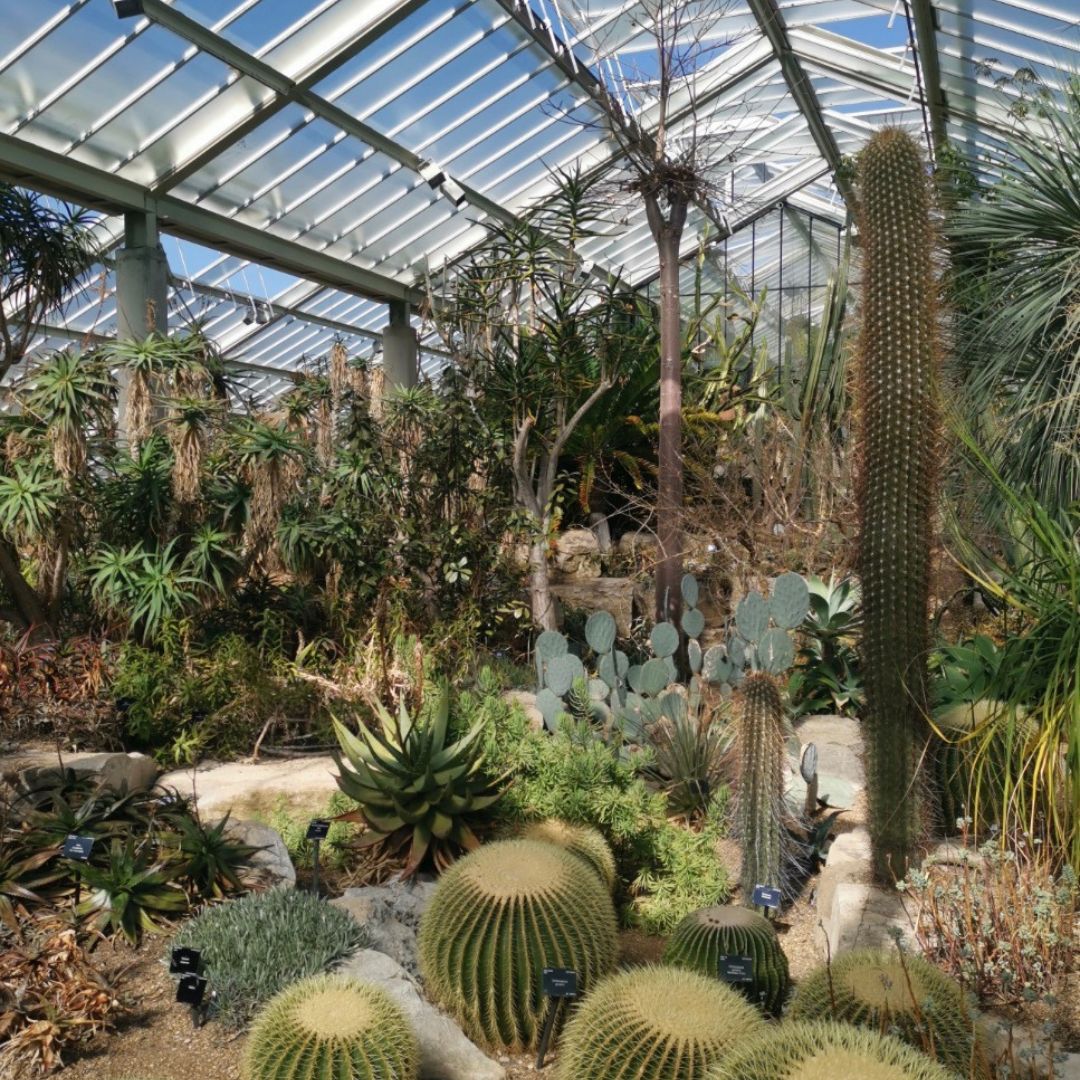
A highlight was the Princess of Wales Conservatory, with its carnivorous pitcher plants (Nepenthes), Venus flytraps (Dionaea muscipula), that we all agreed needed watering, and arid plants. Professor Leitch discussed convergent evolution in arid conditions before we went to the Wet Tropical Zone featuring jade vines (Strongylodon macrobotrys), rare and endangered orchids and fish tanks full of cherry shrimp (Neocaridina davidi).
We completed the day at the Agius Evolution Garden, designed like a phylogenetic tree. We were joined by Dr Ilia Leitch (plant biologist at Kew Gardens and Guinness World Record holder for her research) who explained the different clades in further detail.

The best thing about this event was that we had students from medical genetics, aerospace engineering and anime society join us. Some of the most engaging conversations during the day started as questions from these students interested in understanding more. This shows that an interest and appreciation for biodiversity doesn’t just come from studying it and highlights the importance of getting involved in conversations with people from all backgrounds to discover more about the natural world.
Isabella Jimenez S. BSc Biology. Year 2
Find out more about BSc Biology