
Creative Methods Workshop
Dr Aoife Sadlier reflects on her recent 'Creative Methods in Participatory research PhDs' workshop and how her own research has informed her training
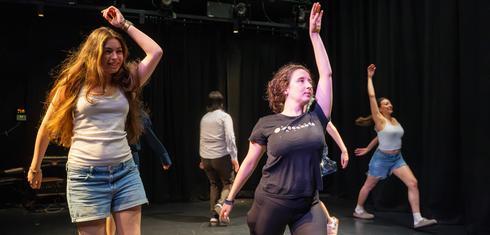
One of the great pleasures I have had in my role as Participatory Research Officer at the Centre for Public Engagement, QMUL, has been running trainings and workshops for early career researchers. One such workshop was the ‘Creative Methods in Participatory Research PhDs’ workshop I ran for the PhD Participatory Research Network in the Franklin-Wilkins Building, King’s College London, on 4 March, 2026.
The PhD Participatory Research Network was established by doctoral students from QMUL, KCL and Imperial College London, with the aim of strengthening the use of participatory methods in their doctoral work and beyond. Speaking to this aim, the main purpose of my session was to explore what is feasible in terms of incorporating creative methods into doctoral theses, considering overall scope and time constraints.
For me, this was a fantastic opportunity to share my experiences of using creative methods across my Masters, PhD and postdoctoral work, discussing what went well and not so well, and embracing Samuel Beckett’s famous maxim: ‘Try again. Fail again. Fail better.’ It was weird and wonderful to be back on my old stomping ground, King’s College London, where I completed my PhD back in early 2017. It felt a bit like passing a torch!
The session began by offering an introduction to creative methods – different types (e.g., photovoice, photo elicitation, forum theatre, mapping), effective environments in which they can be applied (e.g., when exploring sensitive topics and working with marginalised communities), and overall considerations (e.g., scope, purpose, timeline, ethics, planning, trial run periods). One of the key messages was that creative methods should not just be used for novelty; rather, they need to be appropriate for answering research questions and fulfilling research aims.
Following this introduction, I went on to discuss examples from my own research practice: my Masters study on women’s changing perceptions of self and body (Birkbeck College), my PhD study on female (a)sexualities (KCL), and my first postdoctoral project, New Development Frontiers (Loughborough University), led by Professor Richard Giulianotti, which examined the role of sport, culture and education in addressing key sustainable development goals such as gender inequality, poverty and conflict.
With regards to my Masters study, I highlighted the value of combining photo elicitation (where photos are used as a stimulus for discussion) and photo production (where participants create images, in this case self-portraits) with narrative interview techniques. Yet, I also highlighted how important it is to be well-prepared when discussing emotionally triggering topics with participants. E.g., receiving appropriate training in trauma-informed approaches and being able to signpost participants to relevant support services.
My doctoral thesis was on female (a)sexualities, a very personal topic which took me into the terrain of trauma and personal history. It was a multifaceted study that interwove various methodologies: (i) a sociohistorical genealogy of women’s asexuality via literary and dance narratives, (ii) autoethnography and mesearch, comprising my own life writing and creative writing, with an emphasis on my own movement practices and (iii) collective biography work with women. This three-pronged approach led me to a new concept – Zorbitality – as a way of reconfiguring asexuality through collective movement, beyond its dominant cultural narrative of a ‘lack’ of sexual attraction.
Overall, I emphasised the importance of examining the scope of one’s work and making sure it is feasible within the timeframe of a doctoral thesis, as I ended up wading through a lot of data! Furthermore, the verbal insights were richer than the visual data in my project, partly because (in hindsight!) the prompts I gave for the visual activities were not quite precise enough.
With regards to conducting personal and emotionally demanding research, it is important that one builds a strong support network, via personal therapy and community activities. I did not necessarily have the support I needed at the time I was doing my PhD, but was heartened to hear that more support is now out there. Emotionally demanding research ultimately requires a whole other level of robustness. As if doing a PhD isn’t hard enough!
In relation to my postdoctoral work, I highlighted the issues with doing participatory action research within a short timeframe, notably limited funds to sustain the work, navigating endings with research participants, and ultimately the strong potential for burnout. But we also discussed the power of transcending language via creative approaches, from sport interventions to photovoice, as well as the value of holding local stakeholder seminars to enable co-researchers to gain support for their project ideas and to break down siloed ways of working.
After we had discussed these examples, we engaged with a case study in small groups: Zoe Jeffrey’s participatory doctoral study (University of Bath). During one of the COVID lockdowns, Zoe ran three creative workshops with girls to create solutions for their inactivity in PE at school. During these sessions, the girls created artwork and narrative photo stories, and subsequently redesigned their physical education through video games.
Together, we identified the strengths and limitations of the study. Strengths included the rich methodology and in-depth contingency plans that had been drawn up. Yet, there were also questions around the level of the girls’ involvement across the co-design elements. We also discussed other potential methodologies that could have been applied, especially if the study had taken place outside of lockdown.
To cap off the session, workshop participants discussed the role of creative methods in their own work and reflected on how my session had influenced their thinking. The feedback was overwhelmingly positive. Participants were particularly glad I had brought up the topic of burnout, as this is often not discussed enough in the realm of participatory research and doctoral work in general. Equally, many had begun to reconsider the scope of their work, or had seen how creative methods could actually help them answer their research question!
Overall, this session was one of the highpoints of my role. The great thing is that I will be running this session again for doctoral students at QMUL on April 23rd. If you would like to attend, please do not hesitate to register!
Dr Aoife Sadlier
a.sadlier@qmul.ac.uk