
The MBBS programme is not only one of the most popular degrees we deliver at Queen Mary but also serves an important social mission: to train the doctors who will go on to provide the vital care people need, here in East London and across the world. The challenge is to design a curriculum which develops graduates who are professional, compassionate, digitally literate, and deeply human-centred.
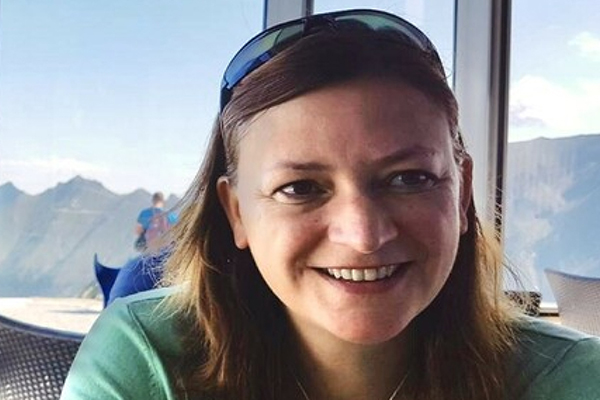
We caught up with Dr Annie Noble-Denny, Reader in Medical Education at IHSE, who has been organising the redesign effort, to discuss how we can prepare students not just to pass their assessments, but to thrive in the realities of modern medicine.
Responding to a changing landscape
For Annie, one of the key drivers has been change at a national level. The introduction of the Medical Licensing Assessment means medical schools must now demonstrate, with real clarity, how their curricula prepare students across a wide range of knowledge, skills, values and behaviours. It’s a big job! As Annie highlighted, “There are 312 patient conditions and 217 patient presentations that students have to engage with”.
However, the redesign is not simply about compliance and passing exams. It is also an opportunity to take a fresh look at what future doctors need. Alongside the demands of the Medical Licensing Assessment, the priorities of the NHS 10-year plan have also shaped the redesign. This includes a greater emphasis on prevention, community-based care, and the use of digital tools in healthcare. Set against the realities of an ageing population and the specific public health challenges facing East London, the case for a more integrated, responsive curriculum becomes even stronger.
Building confidence from day one
Rather than describing the current curriculum as lacking, Annie framed the work as a question of structure and emphasis. One of the biggest ambitions is to give students more meaningful patient contact in the early years of the programme. At present, while students do see patients in primary care during the first two years, the redesign aims to extend that experience and build confidence earlier.
This matters because the transition into clinical placements can be daunting. By the time students reach year three and begin spending more time on wards, some can feel overwhelmed by the complexity of the clinical environment. Annie put it simply: “Working on a ward is a really complex environment”. Her view is that earlier patient contact can help students arrive better prepared, with stronger communication skills and more confidence in how to engage with people.
That means focusing not only on medical knowledge, but on the human side of practice. Annie spoke about the importance of students developing “really good empathic communication skills” and learning to be curious about the patients in front of them. The aim is not to overload students with complexity from day one, but to help them become more comfortable speaking to patients, listening carefully, and building the kind of confidence that will later support their clinical decision-making.
A fully integrated programme
This move towards earlier and more sustained clinical experience reflects a broader shift in medical education. Rather than separating the first years into medical science and the later years into clinical practice, the vision is for a more fully integrated five-year programme. Knowledge and practice are not treated as separate stages, but as parts of the same learning journey.
To support that journey, the redesigned curriculum will be organised around a series of longitudinal themes running across all five years. These themes are intended to shape and enrich students’ learning alongside the core requirements of the degree. They include areas such as health equity, inclusion, reflective practice, clinical research and scholarship, and digital health and future innovation.
One especially important theme is interprofessional learning and collaborative practice. From the beginning of the programme, students will be introduced to the realities of working as part of a wider clinical team. They will explore professional identity, team roles, and how care is delivered across different settings and specialities. Later, this will be built on through scenarios and simulation activities that help students practise communication, decision-making and patient care prioritisation with others.
That focus on teamwork reflects an important aspect of medical practice: good doctors do not work alone. They need to know how to contribute to a team, communicate clearly, and understand the expertise of others around them.
Supporting progression and feedback
The redesign is also thinking carefully about how students are supported to recognise their own progress. Annie and her colleagues are exploring the idea of “clinical readiness outcomes”: clearer expectations for what students should be able to do by the end of each year. These would help make progress more visible and give students a stronger sense of where they are in their development.
Summative assessment will continue in the new curriculum, but Annie is keen to strengthen the developmental side of learning, too. One idea is to extend the use of portfolios from day one, allowing students to build formative work and reflective practice across the whole programme, not just in later years. The aim is to make feedback more meaningful and help students chart their own growth over time.
Balancing technology with human care
Technology will play a role in the new curriculum, including through a new AI framework currently in development. But Annie was clear that technological change must be balanced with the more human aspects of medicine. Through consultation with patient groups, one message has come through strongly: “they want doctors who can demonstrate really clear care and compassion”.
For Annie, one of the most exciting parts of the new curriculum is also one of the simplest: “just getting our students to talk to patients from day one”. In those early conversations, students begin not only to learn medicine, but to start thinking, listening and relating like doctors. And that may be one of the most important foundations of all.
Shaping the curriculum through partnership
The curriculum is being developed in partnership with students, academic staff and patient groups, and there are still opportunities to get involved and learn more about the curriculum as it develops. The next symposium will be held on 24th of April. Details of how to join are below.
MBBS Symposium
When: Thursday, 24 April 2026
Time: 10:00 – 14:30
Where: Old Library, Garrod Building, Whitechapel Campus
Hybrid option available via Microsoft Teams
This half-day symposium, will bring together educators, clinicians, students, and academic leaders to collaborate on enhancing our curriculum to better meet the needs of our learners and future clinical practice.
Who should attend:
Faculty, academic leads, programme coordinators, clinicians, and students.
If you plan to attend in person, please register using the Eventbrite link to help us manage attendance and catering requirements: REGISTER HERE
A Microsoft Teams link will be shared with all hybrid attendees.
If you have any questions, please feel free to reach out to the organising team at: mbbs-voices-of-the-curriculum@qmul.ac.uk
We look forward to seeing you there and hearing your valuable contributions.