
Dr Falco Pfalzgraf (German/MLCL) brings together academics and practitioners to examine the current backlash against gender-inclusive language
Dr Falco Pfalzgraf organised and executed the international two-day conference “Backlash? Gender-Inclusive Language in a Time of Resistance”. The 23 presentations covered over 12 languages, and the event was attended by 221 people based in 34 countries.
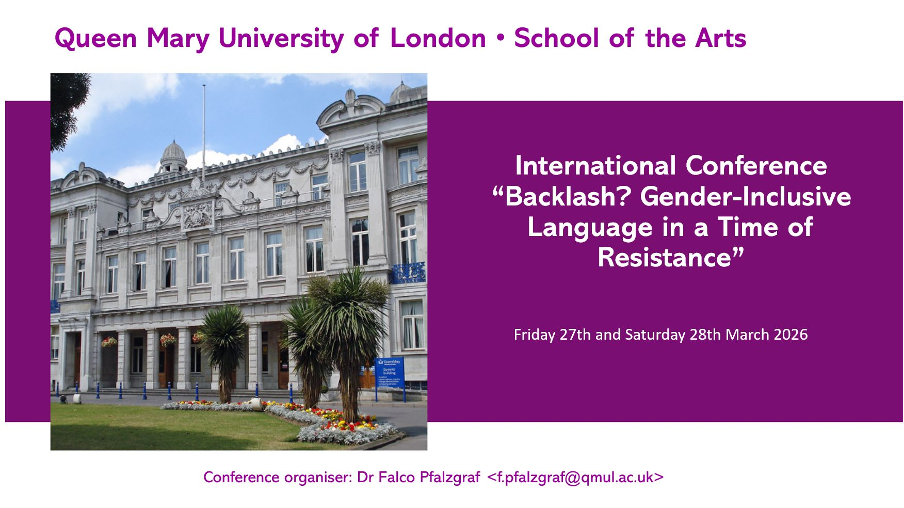
Dr Falco Pfalzgraf (German/MLCL) has successfully organised and delivered the international conference “Backlash? Gender-Inclusive Language in a Time of Resistance”, held online on 27–28 March 2026.
The conference brought together academics and practitioners from around the world to explore one of the most pressing and widely debated topics of our time: gender-inclusive language and the growing resistance to its use. Designed as a fully accessible, free-to-attend event, it enabled global participation and fostered meaningful interdisciplinary exchange.
Dr Pfalzgraf led all aspects of the event, from coordinating presenters and developing the programme to overseeing its smooth execution across two days. The conference featured 23 papers covering more than 12 languages, reflecting the breadth and diversity of current research and practice in this area.
A total of 221 participants from 34 countries attended, contributing to lively discussions on language, identity, and societal change. The event was marked by a high level of engagement throughout, as well as a wide range of international and interdisciplinary perspectives.
Reflecting on the conference, Dr Pfalzgraf emphasised the importance of creating spaces for critical dialogue, particularly on issues at the intersection of language, politics, and social change.
Rather than publishing traditional conference proceedings, a dedicated online repository has been created, providing access to abstracts, presentation slides, and recordings of the sessions. This ensures that the discussions and insights generated by the conference remain accessible to a wider audience.